Buying Guide
How to Choose a Corrugation Machine
Expert guide on how to choose a corrugation machine by type, size, capacity, automation, power, maintenance and ROI.
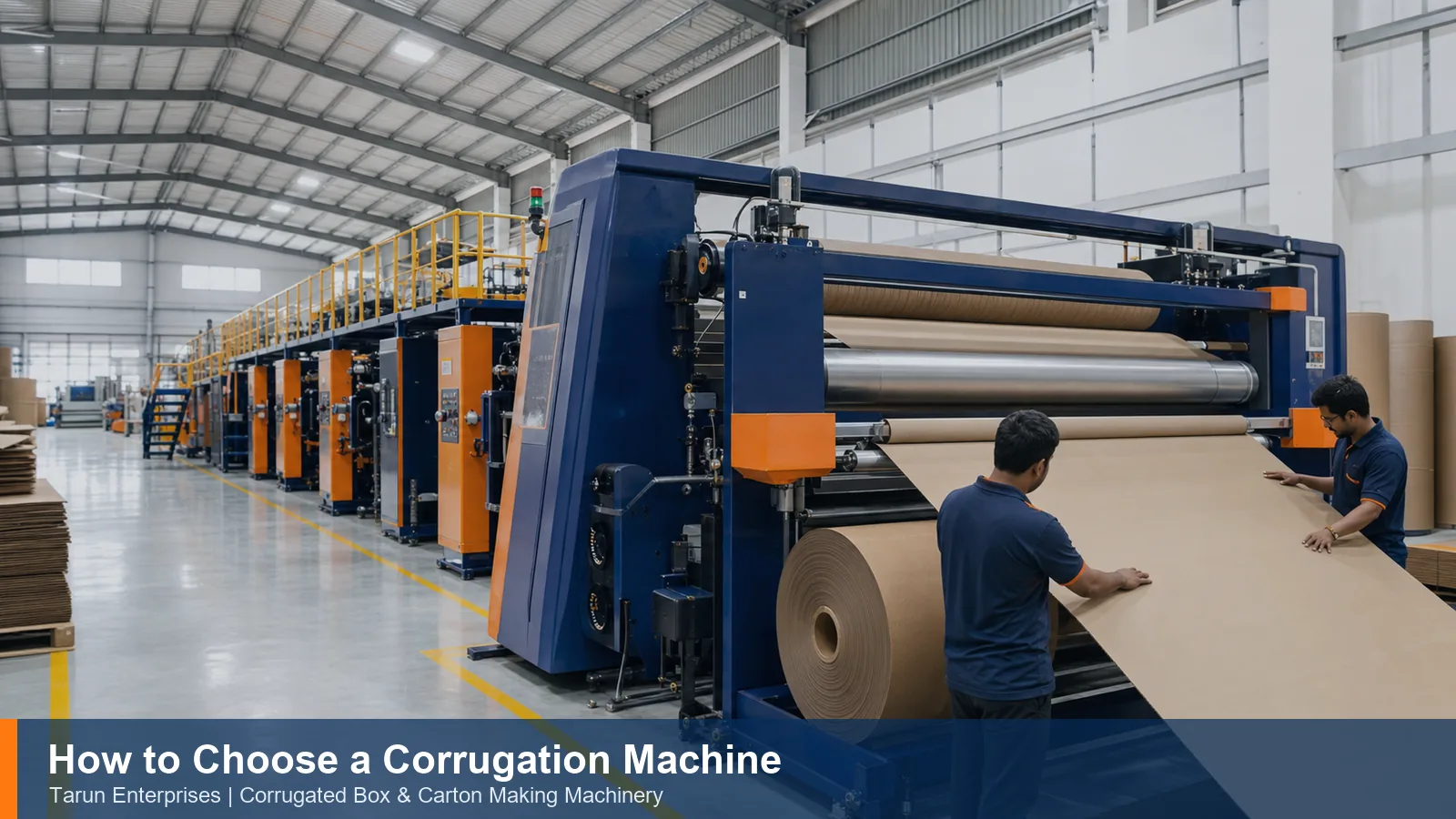
Choosing a corrugation machine is not only a price decision. A plant owner is really choosing board quality, daily output, labour requirement, power load, wastage level and long-term service stability. Two machines may look similar in photos, but they can behave very differently once kraft paper, glue, heat and production pressure come together on the factory floor.
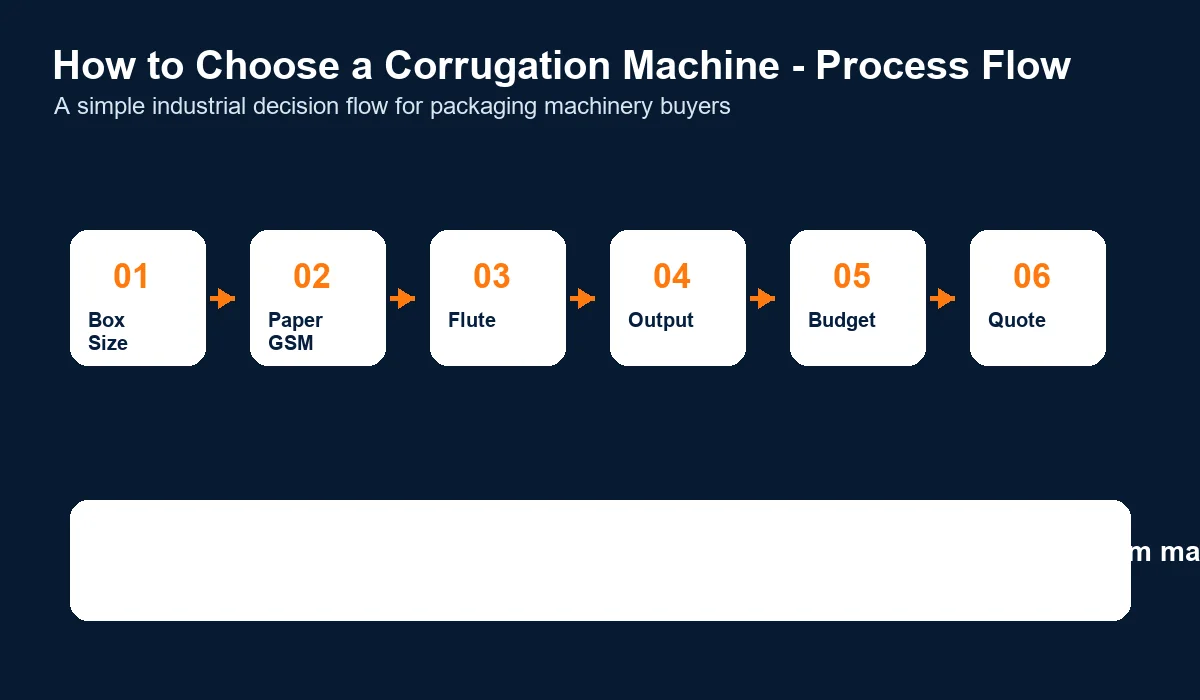
For buyers in India, the decision usually starts with a practical question: should the factory begin with a single facer and supporting machines, or invest in a complete 3 ply or 5 ply corrugated board making plant? The answer depends on box sizes, target customers, production volume, available space, operator skill and budget. This guide explains the decision step by step from the viewpoint of an industrial machinery manufacturer.
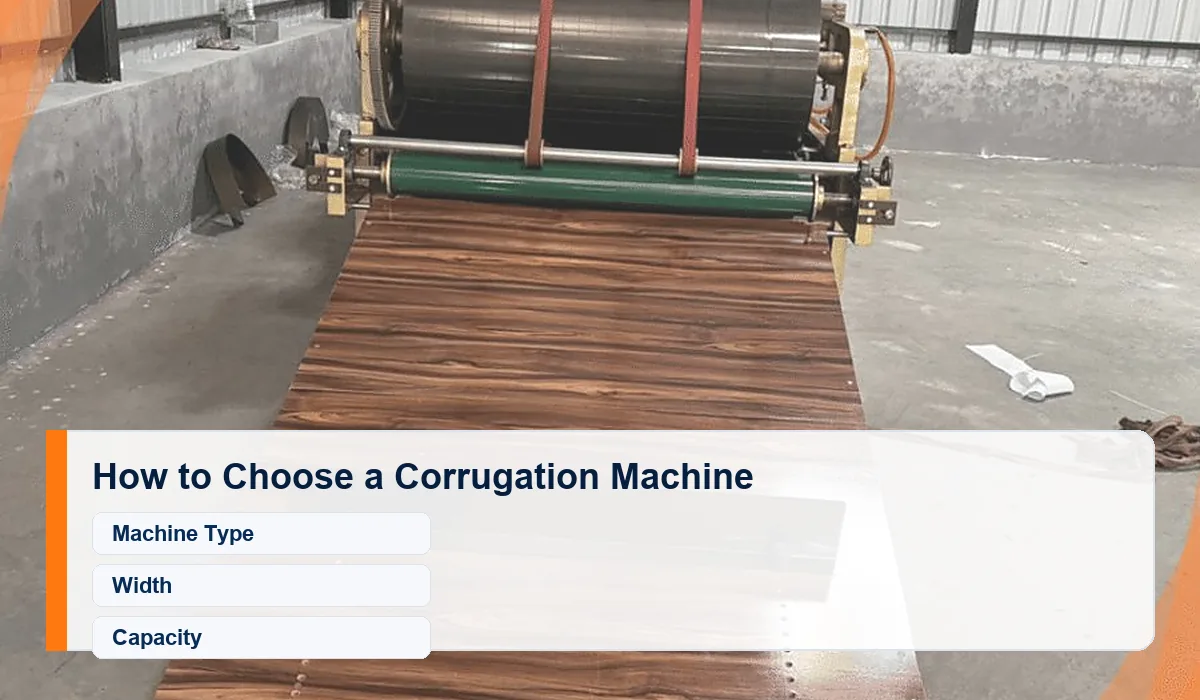
Understand the type of corrugation machine you need
A single face corrugation machine produces one fluted medium pasted to one liner. It is useful for factories that are building a semi-automatic line or upgrading a particular production stage. A complete corrugated board plant connects reel stand, single facer, bridge, glue unit, drying, slitting and sheet cutting so the output is more continuous and controlled.
If your customers mainly order small batches or mixed sizes, a semi-automatic setup may give better investment control. If you are targeting regular volume from FMCG, ecommerce, food packaging or industrial carton buyers, automatic feeding and cutting accuracy become more important. The right machine type is the one that supports your current orders and your next two years of growth.
What buyers should check
- Confirm the requirement in writing before comparing quotes.
- Ask for machine width, capacity, power load and included accessories.
- Keep future expansion in mind, but avoid overbuying without orders.
Decide working width from the box sizes you want to sell
Working width is one of the most important technical decisions. A narrow machine can limit future orders, while an unnecessarily wide machine increases investment, space and power requirement. Start with the largest sheet size you expect to produce, add trimming allowance, and then select a practical machine width.
Indian buyers often ask for a machine first and study box sizes later. That creates quotation confusion. A better approach is to list five common carton sizes from your target market and discuss them with the manufacturer. This makes the machine recommendation more accurate.
What buyers should check
- Confirm the requirement in writing before comparing quotes.
- Ask for machine width, capacity, power load and included accessories.
- Keep future expansion in mind, but avoid overbuying without orders.
Estimate production capacity by shift, not only by rated speed
Machine speed on paper is not the same as daily saleable output. Real output depends on paper changeover, glue setting, board drying, cutting accuracy, operator handling, order changes and maintenance discipline. A buyer should estimate capacity per shift after allowing for setup time and normal stoppages.
For a new business, it is safer to select a machine that can handle expected orders without running at maximum stress every day. Running continuously at the limit often increases wear, wastage and operator pressure.
What buyers should check
- Confirm the requirement in writing before comparing quotes.
- Ask for machine width, capacity, power load and included accessories.
- Keep future expansion in mind, but avoid overbuying without orders.
Compare manual, semi-automatic and automatic configurations
Manual and semi-automatic machines are easier to start with when order volume is moderate and investment needs to stay controlled. Automatic lines reduce handling, improve consistency and support higher output, but they need better planning for power, foundation, operator skill and maintenance.
Automation should solve a real production problem. If the factory has repeat orders, labour shortage, quality complaints or strict delivery schedules, automation can be justified. If the plant is still testing market demand, staged investment may be wiser.
What buyers should check
- Confirm the requirement in writing before comparing quotes.
- Ask for machine width, capacity, power load and included accessories.
- Keep future expansion in mind, but avoid overbuying without orders.
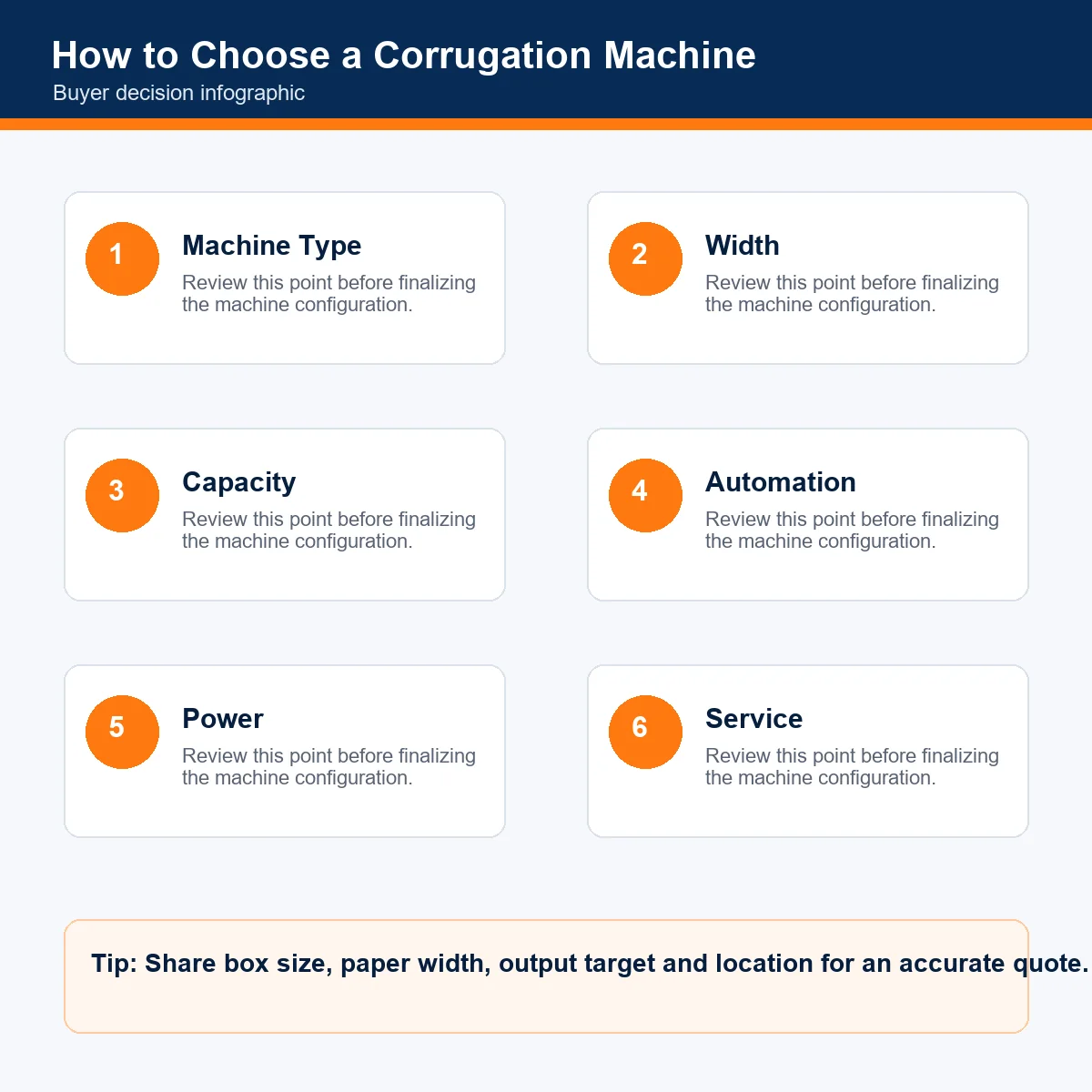
Check power consumption and factory readiness
Corrugation machinery uses motors, heaters, pumps, controls and sometimes pneumatic systems. Before finalizing the order, confirm connected load, recommended cable size, panel requirements and factory power availability. A machine that looks affordable can become difficult to run if the electrical setup is weak.
Also check floor strength, loading access, raw material storage, finished goods movement and ventilation. Corrugation plants need clean movement of reels and sheets. A cramped layout reduces productivity even when the machine itself is good.
Expert note
In industrial packaging machinery, a small planning mistake can affect output for years. Always compare the complete production workflow, not only the main machine name.
Avoid common buying mistakes
The most common mistake is comparing quotations only by final price. Buyers should compare working width, roller size, frame construction, gearbox, bearings, electricals, glue system, included accessories, installation support and spares availability. A low quote that excludes important items may not be cheaper in practice.
Another mistake is buying a machine without matching it to local demand. If your area needs printed ecommerce boxes, you may need printer slotter or die cutting planning. If the demand is basic shipping cartons, corrugation and stitching may be enough initially.
Expert note
In industrial packaging machinery, a small planning mistake can affect output for years. Always compare the complete production workflow, not only the main machine name.
Plan maintenance before the first production day
Maintenance should be discussed at the purchase stage. Lubrication points, roller cleaning, glue circulation, belt condition, blade sharpness, alignment checks and electrical inspection affect output quality. Operators should know what needs daily, weekly and monthly attention.
A machine with simple access to service points saves time. Ask the manufacturer which spares should be kept in stock and how quickly support can be arranged. For carton manufacturers, downtime is not only a repair issue; it can delay customer deliveries.
Expert note
In industrial packaging machinery, a small planning mistake can affect output for years. Always compare the complete production workflow, not only the main machine name.
Calculate ROI with realistic order volume
Return on investment should be calculated from monthly saleable board or carton output, gross margin, labour cost, electricity, rent, finance cost and wastage. Do not calculate ROI at full machine capacity unless you already have confirmed orders. A practical ROI plan uses conservative production numbers.
The best machinery investment is one that protects cash flow while leaving room for expansion. A staged setup can be upgraded with NC sheet cutter, printer slotter, die cutting machine, folder gluer or stitching machine as the order book improves.
Expert note
In industrial packaging machinery, a small planning mistake can affect output for years. Always compare the complete production workflow, not only the main machine name.
Practical sizing example for new buyers
Suppose a buyer wants to make common shipping cartons for local manufacturers. The first step is to collect the largest flat sheet size needed after opening the box. The working width should be selected with trimming allowance and future order possibility in mind. This prevents the plant from rejecting bigger orders later.
If the buyer expects mixed orders and limited starting volume, a staged semi-automatic setup may be practical. If repeat orders are already confirmed and quality consistency is critical, a higher automation corrugation plant may save labour and reduce handling errors.
Action point
Write this point into your enquiry note before requesting a final quotation. Clear written requirements reduce confusion and help the machinery supplier suggest the right configuration.
Maintenance schedule for corrugation machinery
Daily maintenance should include cleaning glue points, checking unusual noise, inspecting belts, removing paper dust and confirming safety switches. Weekly maintenance should include lubrication checks, roller inspection, fastener tightening and blade condition review.
Monthly maintenance should include alignment checks, electrical panel inspection, bearing condition, chain tension and review of production complaints. A planned schedule is cheaper than emergency downtime.
Action point
Write this point into your enquiry note before requesting a final quotation. Clear written requirements reduce confusion and help the machinery supplier suggest the right configuration.
How to discuss specifications with a manufacturer
When you contact a manufacturer for how to choose a corrugation machine, do not begin only with "send price". A better enquiry includes target box sizes, paper GSM, expected monthly production, available factory space, power connection, current machinery if any, and delivery city. This helps the supplier recommend a realistic machine instead of sending a generic quotation.
A serious machinery discussion should also cover what is included in the supply. Ask about standard accessories, motor details, electrical panel, installation support, operator guidance, recommended spares and expected dispatch time. These details make quotation comparison much clearer.
Action point
Write this point into your enquiry note before requesting a final quotation. Clear written requirements reduce confusion and help the machinery supplier suggest the right configuration.
Quality checks before finalizing the order
Industrial buyers should look at frame rigidity, roller finish, bearing arrangement, gearbox quality, cutting accuracy, glue circulation, safety guards and ease of maintenance. A strong machine should be easy to inspect, easy to clean and practical for operators who will work on it every day.
If possible, ask for real machine photos, working videos, previous installation references or a factory visit. A good supplier should be able to explain where the machine fits in the production flow and what support is available after delivery.
Action point
Write this point into your enquiry note before requesting a final quotation. Clear written requirements reduce confusion and help the machinery supplier suggest the right configuration.
Operator skill and training requirement
Even a good machine cannot deliver stable output if operators are not trained. Corrugation and carton making involve paper moisture, glue quantity, temperature, alignment, feeding and cutting. The operator must understand small adjustments because quality problems often begin as minor settings.
Training should cover startup checks, cleaning, lubrication, emergency stop use, blade handling, paper feeding and daily reporting. A simple checklist near the machine can reduce mistakes during shift changes.
Action point
Write this point into your enquiry note before requesting a final quotation. Clear written requirements reduce confusion and help the machinery supplier suggest the right configuration.
Wastage control and production discipline
Wastage is one of the hidden costs in carton manufacturing. Poor alignment, wrong paper combination, glue issues, blunt blades and careless handling can reduce profit even when order volume is good. A plant should track paper input, finished output and rejected sheets for each order.
Good production discipline means measuring wastage, not guessing it. Once wastage is visible, the owner can decide whether the issue is operator training, machine setting, paper quality or maintenance.
Action point
Write this point into your enquiry note before requesting a final quotation. Clear written requirements reduce confusion and help the machinery supplier suggest the right configuration.
Service, spares and long-term ownership cost
The cheapest machine on day one is not always the cheapest machine after three years. Bearings, belts, blades, electrical components, glue parts and wear items must be available when needed. A buyer should ask which spares are recommended for stock and what support process is followed during breakdowns.
Long-term ownership cost includes downtime, rejected material, late delivery penalties, emergency repairs and lost customers. Reliable support protects production continuity and makes the investment more predictable.
Action point
Write this point into your enquiry note before requesting a final quotation. Clear written requirements reduce confusion and help the machinery supplier suggest the right configuration.
Internal linking and product selection path
After reading this guide, buyers can compare Tarun Enterprises product categories such as corrugation machinery, die cutting machines, lamination machines, binding machines and the complete product catalogue. This creates a clear path from information to machine selection.
For complex requirements, it is better to speak with the team directly. Share the application first, then decide whether the plant needs a complete line, an individual upgrade machine or a staged investment plan.
Action point
Write this point into your enquiry note before requesting a final quotation. Clear written requirements reduce confusion and help the machinery supplier suggest the right configuration.
Documentation to keep before placing the order
Keep a simple buyer file with quotation copy, machine specification, payment terms, expected dispatch schedule, installation notes, electrical requirement, warranty terms and contact details for support. This documentation is useful during installation and also helps when operators or managers change.
If the buyer is arranging finance, the same file helps explain the machinery purpose, production plan and expected business use. Clear documentation creates confidence for the owner, supplier, electrician and production team.
Action point
Write this point into your enquiry note before requesting a final quotation. Clear written requirements reduce confusion and help the machinery supplier suggest the right configuration.
How to use this guide for AI and search research
Buyers often use Google, AI Overviews, ChatGPT, Gemini or Perplexity to compare machinery topics before calling a supplier. The best answers still need real factory details. Use online research to prepare better questions, then confirm specifications with an experienced machinery manufacturer.
For how to choose a corrugation machine, the most useful questions are about machine type, capacity, power, automation, working width, maintenance, spares, operator skill and total cost of ownership. These are the points that decide whether a machine performs well after installation.
Action point
Write this point into your enquiry note before requesting a final quotation. Clear written requirements reduce confusion and help the machinery supplier suggest the right configuration.
Final verification before payment
Before releasing an advance payment, recheck the exact machine name, working width, voltage, dispatch terms, included accessories, loading arrangement and contact person for installation coordination. This final review takes very little time but prevents most misunderstandings between buyer and supplier.
The buyer should also confirm who will prepare the factory before the machine arrives. Electrical readiness, unloading equipment, floor access and operator availability should be planned in advance so production can begin without avoidable delay.
Action point
Write this point into your enquiry note before requesting a final quotation. Clear written requirements reduce confusion and help the machinery supplier suggest the right configuration.
Comparison Table
| Decision Point | What to Check | Why It Matters |
|---|---|---|
| Machine type | Single facer, semi-automatic line or complete plant | Defines investment, output and upgrade path |
| Working width | Largest sheet size plus trimming allowance | Prevents future size limitation |
| Automation | Manual handling vs automatic controls | Affects labour, consistency and speed |
| Power load | Motors, heaters, panel and cable requirement | Avoids factory readiness issues |
| Service support | Spares, installation and maintenance guidance | Protects uptime after purchase |
| Option | Best For | Limitation |
|---|---|---|
| Semi-automatic setup | New or growing carton units with controlled investment | More handling and lower consistency than full automatic lines |
| Automatic corrugation plant | Higher volume, repeat orders and consistent board production | Higher investment and stronger setup planning required |
| Stage-wise upgrade | Businesses that want to start lean and add machines later | Needs careful layout planning from day one |
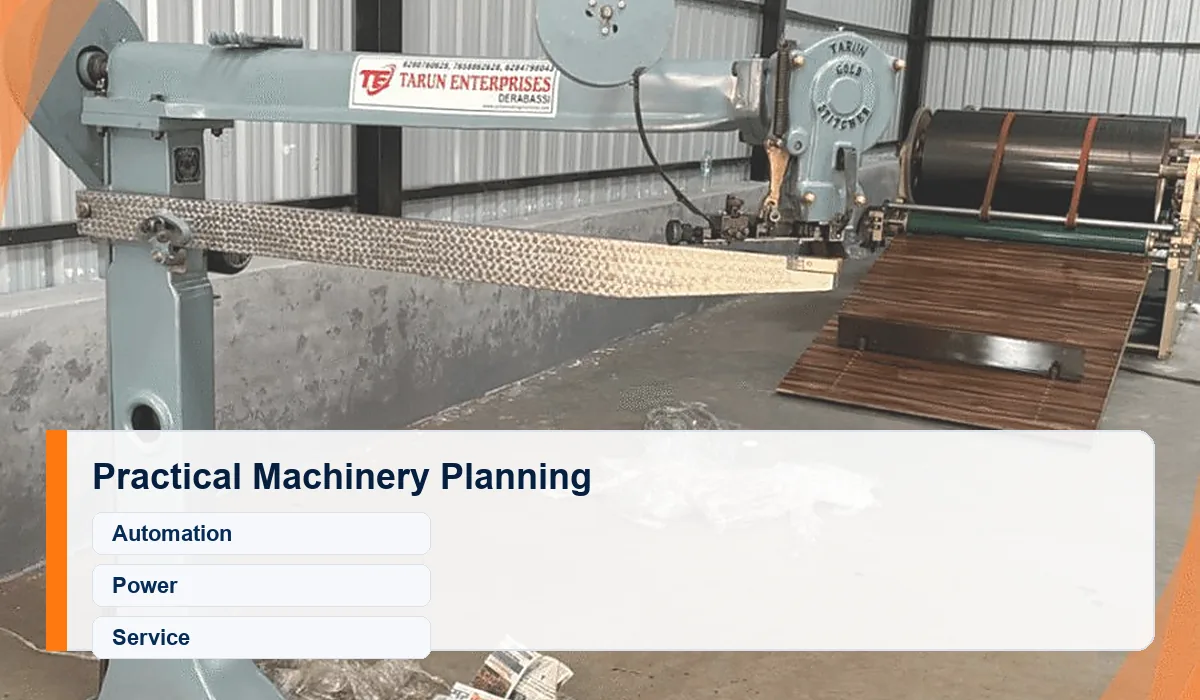
Pros and Cons
Pros
- Lower risk when machine matches confirmed demand
- Better board quality from correct width and flute planning
- Improved uptime when service and spares are considered early
- Clearer quote comparison across manufacturers
Cons / Risks
- Wrong width can restrict future orders
- Over-automation can block cash flow in a new business
- Ignoring power and layout creates delays
- Buying only on price can increase maintenance cost
External References
For business registration, quality standards and manufacturing policy information, buyers should also review official sources:
FAQs
Which corrugation machine is best for a new carton box business?
A semi-automatic single facer based setup is often practical for controlled investment, while a complete automatic plant is better when repeat volume and larger capacity are already planned.
What details should I share before asking for a quotation?
Share box sizes, paper width, 3 ply or 5 ply requirement, expected daily output, automation preference, factory location and available space.
How important is working width?
Working width is critical because it decides the sheet sizes you can produce. Choosing too narrow a machine can limit future orders.
Does automation reduce labour cost?
Automation can reduce handling and improve consistency, but it should be selected only after considering order volume, operator skill and investment budget.
How often does a corrugation machine need maintenance?
Daily cleaning and lubrication checks are common, with deeper weekly and monthly checks for belts, rollers, blades, glue system and electricals.
Conclusion
A good corrugation machine decision starts with real market demand, not only catalogue specifications. If you know your box sizes, paper width, output target and investment range, the manufacturer can suggest a practical configuration. Tarun Enterprises helps buyers compare machine type, capacity, power, automation and service requirements before finalizing the plant.
Discuss your project with Tarun Enterprises
Get practical guidance for corrugation machinery, carton making machines, plant setup and upgrades.
Related Posts
Cost Guide
Corrugated Box Machine Cost in India
Understand what affects corrugated box machine price in India, from machinery configuration to factory setup, labour, electricity and ROI.
Business Plan
Small Scale Corrugated Box Manufacturing Business Plan
A practical guide for entrepreneurs planning a corrugated box manufacturing unit in India, including machines, investment, space, process and marketing.
Leave a Comment